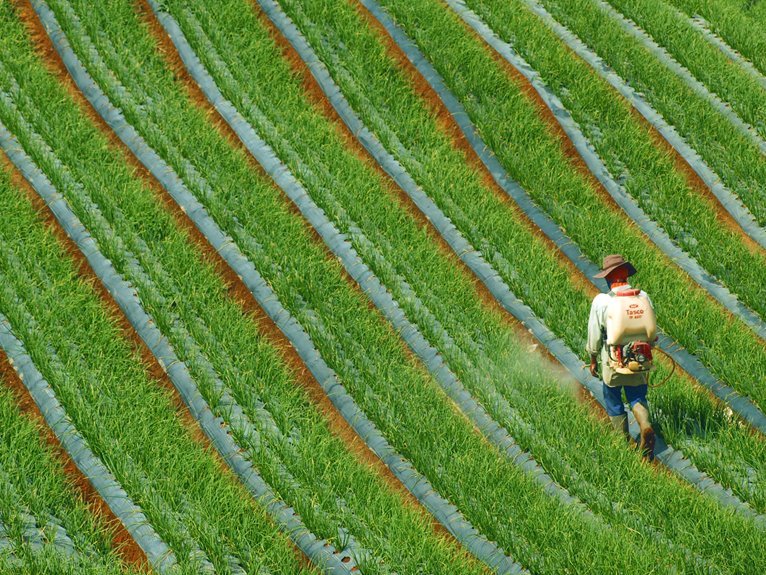
While effective fungicides can significantly enhance crop health, their misuse can lead to resistance and environmental concerns. It’s crucial to understand both the benefits and the risks associated with these products. By implementing best practices for application, you can optimize crop protection while minimizing negative impacts. However, navigating this balance isn’t straightforward, and the implications of your choices can extend far beyond immediate yield outcomes. What strategies will you adopt to ensure sustainable success?
Why Crop Protection Matters: Understanding the Threats
Crop protection is essential, as it directly influences agricultural productivity and food security.
By implementing effective strategies, you can mitigate threats like pests, which can cause significant reductions in crop yield.
Understanding pest resistance mechanisms allows you to adopt targeted measures, ensuring healthier crops and sustainable farming.
Ultimately, robust crop protection enhances food availability, supporting your desire for autonomy in agricultural practices.
Unique Benefits and Properties of Key Fungicides
While you may be familiar with various pest control methods, understanding the unique benefits and properties of key fungicides is crucial for maximizing crop health and yield.
Effective fungicides enhance fungicide efficacy, targeting specific pathogens while minimizing harm to beneficial microbes. Their strategic use can help manage microbial resistance, ensuring sustainable crop production and protecting your investments over time.
Best Practices for Applying Fungicides
Understanding the unique benefits of key fungicides sets the stage for effective application strategies.
Focus on optimal application timing to enhance efficacy while minimizing environmental impact.
Implement resistance management practices to prolong fungicide effectiveness and prevent pathogen adaptation.
Always prioritize safety precautions, ensuring proper gear and adherence to guidelines.
These best practices can significantly improve your crop protection efforts while supporting sustainable agriculture.
What You Need to Know About Fungicide Pros and Cons?
What should you consider when weighing the pros and cons of fungicides?
You’ll need to assess their effectiveness against fungal diseases and the risk of fungicide resistance, which can diminish their efficacy over time.
Additionally, evaluate the environmental impact, as some fungicides may harm beneficial organisms.
Balancing these factors will help you make informed decisions for sustainable crop protection.
Conclusion
In conclusion, effective fungicide use is crucial for safeguarding crop health and ensuring food security. Did you know that nearly 25% of global crop yields are lost annually due to fungal diseases? By adopting best practices and understanding the pros and cons of fungicides, you can significantly enhance your crops’ resilience. Balancing productivity with sustainable approaches not only protects your harvest but also contributes to a more secure food supply for future generations.