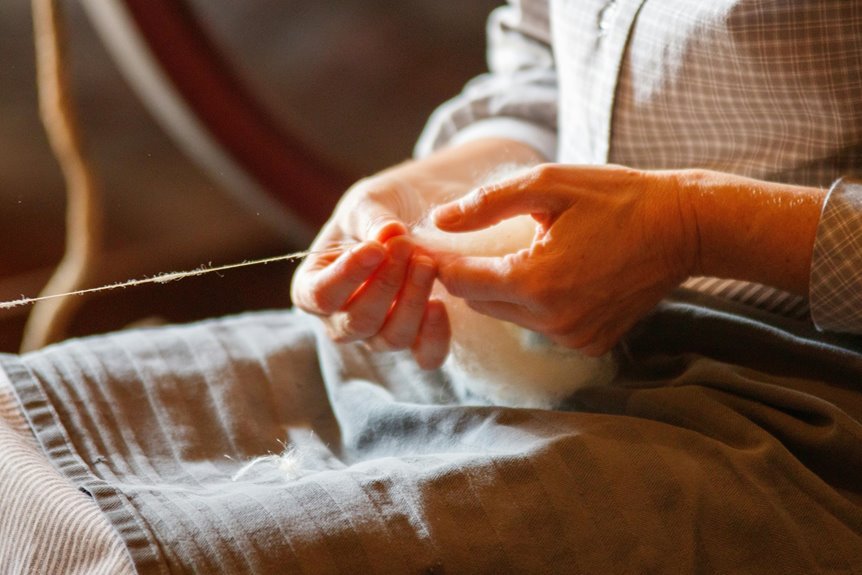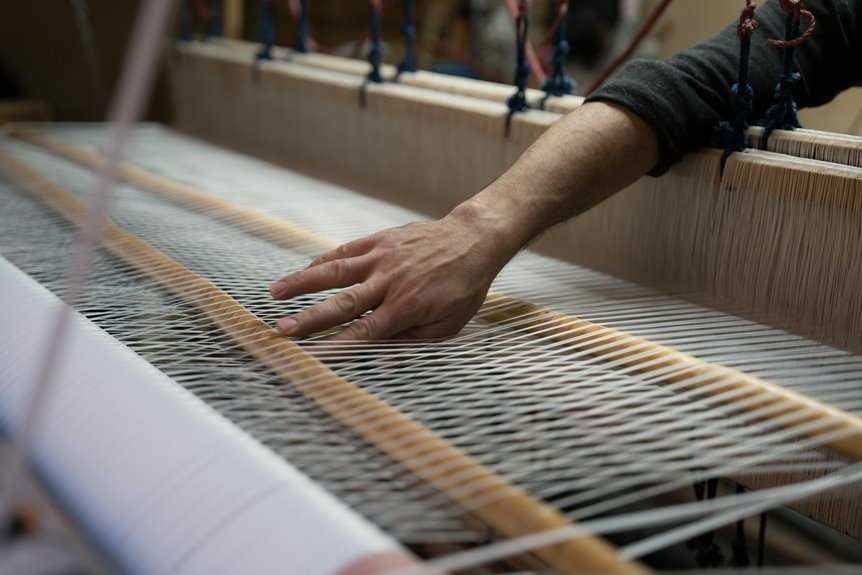
In today’s textile industry, the weaving process has undergone significant transformation through modern methods. You’ll notice how automated looms and smart fabrics streamline production while preserving traditional craftsmanship. These advancements not only enhance efficiency but also introduce new design possibilities. As sustainability and customization become paramount, the implications for artisans and manufacturers are profound. Understanding these shifts can provide insight into the future of textile production and the challenges that lie ahead.
The Evolution of Weaving Techniques
As weaving techniques evolved, they transformed from simple hand-operated looms to sophisticated machinery that revolutionized the textile industry.
You’ve witnessed how traditional handloom heritage blends with new methods, enabling the creation of intricate digital patterns.
This fusion not only preserves cultural craftsmanship but also empowers artisans, enhancing their creative freedom while meeting modern demands, ultimately redefining the landscape of textile production.
Streamlined Technology in Weaving
While traditional weaving methods laid the foundation for textile production, streamlined technology has dramatically enhanced efficiency and precision in modern processes.
Automated looms allow for faster production, reducing labor costs and minimizing errors.
You can now integrate smart fabrics, which offer advanced functionalities like moisture-wicking and temperature regulation, further broadening design possibilities and meeting diverse consumer needs with unprecedented flexibility and innovation.
Innovative Technologies Shaping Modern Weaving
The advancements in weaving technology are reshaping the landscape of textile production.
Smart fabrics are integrating sensors and responsive materials, enhancing functionality and versatility.
Meanwhile, automated looms streamline operations, increasing efficiency and precision.
These innovations not only elevate design possibilities but also empower you to explore new realms of creativity in textile applications, ultimately transforming how you interact with fabric.
Future Trends in Textile Production
Emerging trends in textile production are set to redefine the industry landscape, driven by sustainability and digital integration.
You’ll see sustainable practices gaining traction, minimizing waste and enhancing resource efficiency.
The automation impact will streamline processes, allowing for quicker turnarounds and greater customization.
As you embrace these innovations, expect a more agile, environmentally conscious industry that prioritizes both quality and ethical standards.
Conclusion
In conclusion, the weaving process has undergone remarkable changes, integrating technology with traditional craftsmanship. By adopting advanced looms and smart fabrics, you’re not just enhancing efficiency but also expanding your creative horizons. As the industry moves towards sustainability and customization, it’s clear that these innovations are paving the way for a brighter future in textile production. Ultimately, blending the old with the new allows you to have your cake and eat it too, preserving heritage while embracing progress.