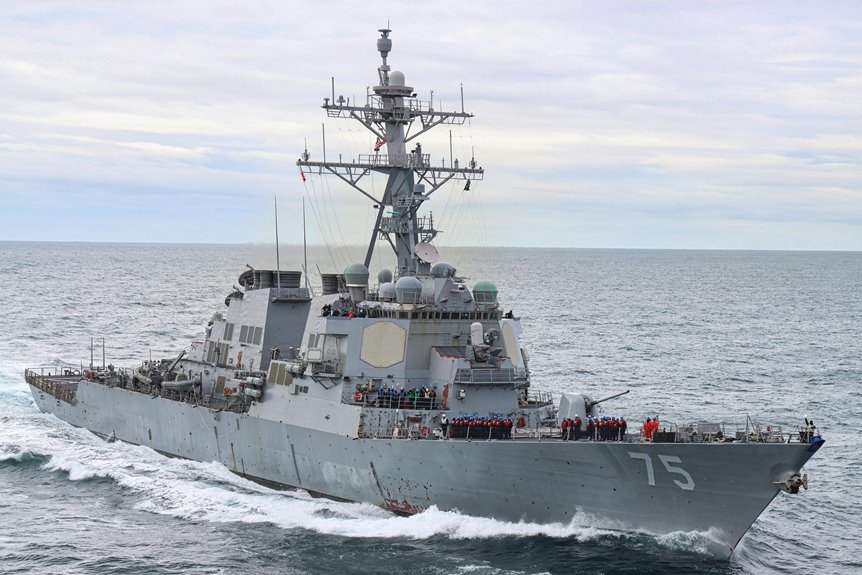
The recent deployment of the USS Gerald R. Ford highlights the Navy’s commitment to integrating advanced defense technologies. With autonomous vessels and enhanced cybersecurity measures, operational capabilities are markedly evolving. This shift not only improves response times but also mitigates risks to personnel. As these innovations reshape naval strategy, it raises questions about the effectiveness of traditional defense systems and their role in future maritime conflicts. What implications will this have for global naval power dynamics?
Recent Innovations in Naval Defense Systems
As naval threats evolve, recent innovations in naval defense systems have become crucial for maintaining maritime security.
Autonomous vessels enhance operational capabilities, enabling quicker responses to potential attacks.
Additionally, advancements in cyber warfare defense mechanisms protect critical infrastructure from digital assaults.
Integration of Advanced Technology in Global Fleets
While nations modernize their naval fleets, the integration of advanced technology plays a pivotal role in enhancing operational effectiveness and strategic deterrence.
Autonomous vessels are revolutionizing maritime operations, allowing for increased efficiency and reduced risk to personnel.
Simultaneously, the rise of cyber warfare necessitates robust cybersecurity measures to protect fleet systems, ensuring that technological advancements contribute to both offensive and defensive capabilities.
Impacts on Naval Strategy and Operations
The integration of advanced technology fundamentally reshapes naval strategy and operations, influencing how nations approach maritime conflicts and deterrence.
By enhancing capabilities against asymmetric warfare, navies can deter adversaries more effectively.
This shift not only alters engagement tactics but also demands a reevaluation of resource allocation, training, and partnerships, ensuring you remain agile in a rapidly evolving maritime landscape.
Future Trends in Maritime Defense Technology
Emerging trends in maritime defense technology promise to revolutionize naval capabilities, making fleets more adaptable and resilient.
The integration of autonomous vessels enhances operational flexibility, enabling missions without direct human intervention.
Concurrently, advancements in cyber warfare are crucial, protecting sensitive systems from digital threats.
Together, these innovations empower navies to maintain a strategic edge, ensuring freedom of navigation in increasingly contested waters.
Conclusion
As the tides of maritime warfare shift, embracing advanced naval defense technology becomes your vessel’s lifeline. The integration of autonomous systems and fortified cybersecurity creates a robust shield against emerging threats, allowing fleets to navigate the stormy seas of modern challenges. Future innovations promise to further enhance agility and deterrence, ensuring your naval operations remain as formidable as a fortress at sea. Stay ahead of the curve, and let these advancements chart your course toward maritime supremacy.